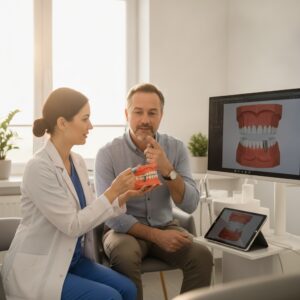
Dental implants are a reliable way to “put in teeth” again when you’ve lost one or more teeth. This post is for people with missing teeth who want a lasting, natural-feeling solution. Read on for simple steps, benefits, and clear next actions to find out if implants are right for you.
What Are Dental Implants and How They “Put In Teeth”
Dental implants are small titanium fixtures placed into the jaw to act like tooth roots. An implant supports an abutment, and the abutment holds a crown, bridge, or denture. By replacing the root first, implants allow dentists to literally put in teeth again that feel stable and look natural. Unlike removable dentures, implants fuse with bone to give long-term support for chewing and speech.
Who Can Get Implants to “Put In Teeth” Again?
Good candidates are adults in generally good health with healthy gums and enough jaw bone to support an implant. Common barriers include significant bone loss, uncontrolled diabetes, and heavy smoking. The good news: many people with these issues can still get implants after treatments like bone grafting, gum therapy, or medical management, so implants remain an option for many who want to put in teeth again.
The Step‑by‑Step Implant Process
Consultation & 3D Imaging
Your first visit includes an exam, discussion of goals, and 3D imaging like a CBCT scan. Digital impressions and scans let the dentist design a custom plan for exactly where implants will go. This helps predict outcomes and reduces surprises during surgery.
Surgery & Guided Placement
During implant placement, the dentist inserts the titanium fixture into the jaw. Sedation options, including IV sedation, can make the experience calm and pain-free. Advanced guiding tools, such as real-time navigation systems, help place implants very precisely for safer, faster recovery.
Healing & Final Restoration
After placement, implants need time to bond with bone—a process called osseointegration. You may wear a temporary tooth while healing. Once the implant is stable, a custom-made final crown or denture is attached. Many practices now use in-house 3D printing to speed up and refine final restorations for a better fit and quicker results.
Benefits of Using Implants to Put In Teeth
– Strong chewing power that feels like natural teeth – Helps prevent bone loss where teeth are missing – Improves speech and comfort compared to loose dentures – Long lifespan with proper care—often decades – Natural look and color matched to your smile
Risks, Cost Factors, and Longevity
As with any surgery, implants carry some risks like infection or implant failure, but these are uncommon with good planning and care. Cost depends on how many teeth you need to put in, whether bone grafting is needed, and the complexity of the surgery. With good oral hygiene and regular dental visits, implants can last for many decades.
Why Patients Choose HAR Dental Group to Put In Teeth
Dr. Omar Harmouche leads HAR Dental Group with advanced implant training and a patient-first approach. The practice uses CBCT imaging, real-time guided placement, Primescan digital scans, and in-house 3D printing to plan and deliver precise, comfortable full-mouth restorations. They also offer IV sedation for anxious patients and complex cases.
Next Steps — How to Learn If Implants Are Right for You
Schedule a consultation to review your medical history, current medications, and goals. Bring a list of meds and past dental records if you have them. The team can discuss IV sedation, financing options, and a step-by-step plan to safely put in teeth again. Call or book online to get started.