If you want a brighter, more even smile, this guide to porcelain veneers will walk you through what to expect. You’ll learn what veneers are, who benefits, the steps involved, risks, costs, and how to care for them. This guide is written for anyone thinking about cosmetic dental work and wants clear, practical next steps. It also answers common questions searchers use, like “veneers teeth” and what to ask at your first visit.
What Are “vineers teeth” (Dental Veneers)?
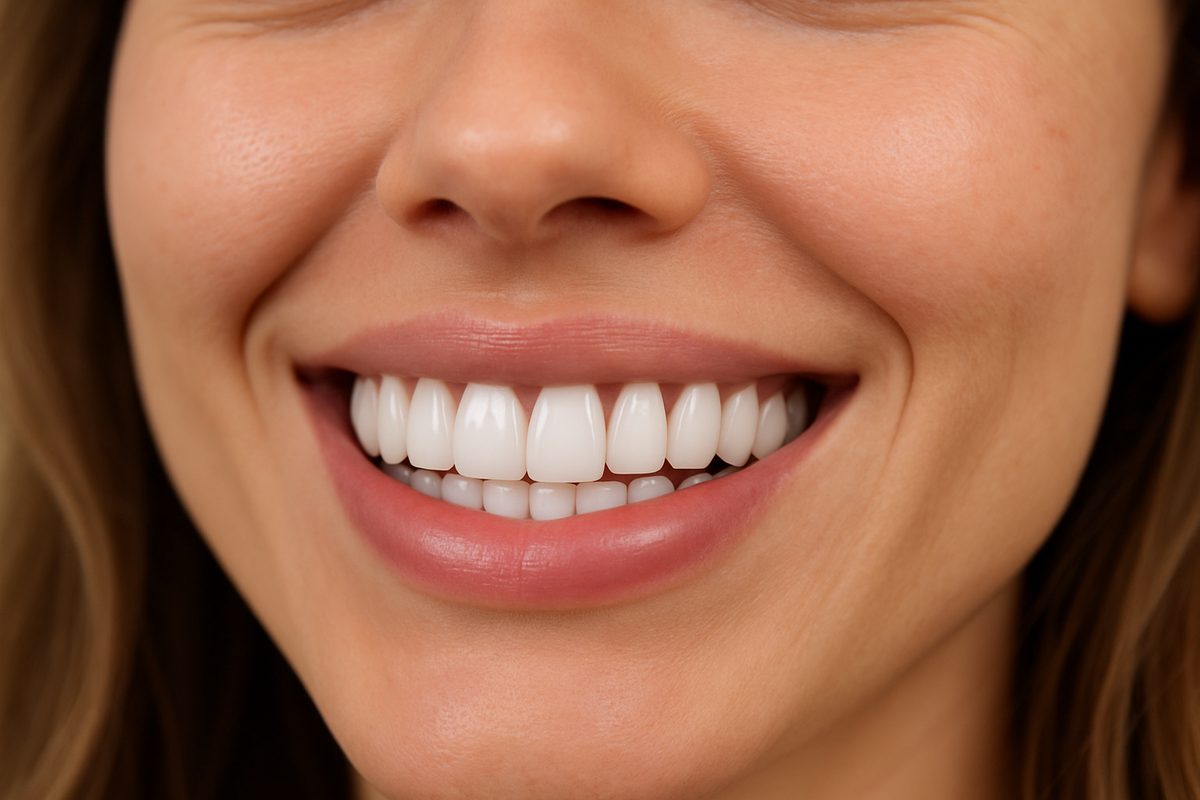
Dental veneers are thin shells bonded to the front of teeth to change color, shape, or length. They cover stains that don’t respond to whitening, fix small chips, and close minor gaps. Veneers can create a natural, uniform smile without full crowns on every tooth. The two main types are porcelain veneers and composite veneers, which differ in material, durability, and how they’re made.
Types Of Veneers: Porcelain Vs Composite
Porcelain veneers
Porcelain veneers are made in a dental lab from ceramic materials. They mimic natural enamel with a lifelike translucency and resist staining well. Porcelain veneers usually last the longest—often 10–15 years or more with good care. The process typically requires impressions or digital scans, temporary veneers, and a final cemented restoration from the lab.
Composite veneers
Composite veneers are placed by the dentist directly on the tooth using tooth-colored resin. They can be done in one visit and cost less than porcelain. Composite is easier to repair but stains and wears faster, often needing touch-ups or replacement within 5–7 years. Composite is a good short-term or budget option but may not match porcelain for color stability or longevity.
Who Is A Good Candidate For Veneers?
Good candidates are adults with healthy gums, no active decay, and enough enamel for bonding. Veneers are ideal for discoloration, small chips, misshapen teeth, or mild gaps. They are not recommended for untreated gum disease, large cavities, or heavy tooth grinders unless those issues are managed first. If your teeth need major reshaping or biting support, crowns or orthodontics may be better options.
The Veneer Treatment Process: Step-by-Step
Consultation and Planning
Your dentist reviews goals, takes photos and digital scans, and designs the smile with shade matching. Modern practice uses digital smile design to preview results and plan how many veneers are needed.
Tooth preparation and impressions
Most cases require minimal enamel removal; some no-prep options exist. The dentist will shape the teeth and take precise impressions or use a Primescan intraoral scanner. Temporary veneers may be placed while the final ones are made.
Lab fabrication and placement
Porcelain veneers are fabricated in a lab or with in-house 3D printing. At the try-in, your dentist checks fit and color, then bonds the veneers using a strong dental cement. Small adjustments are made and final polishing completes the process.
What To Expect During Recovery And Follow-Up
Mild sensitivity is common for a few days after placement. Avoid very hard or sticky foods initially. You’ll return for a follow-up to check bite and polish margins. Most people adapt quickly and feel comfortable within a week or two.
Costs, Longevity, And Value
Costs vary by material, number of veneers, and technology used. Porcelain veneers cost more up front but last longer and resist stains. Composite is cheaper but may need replacement sooner. Consider long-term value: fewer replacements and better aesthetics can make porcelain the smarter investment for many patients.
Risks, Complications, And How To Minimize Them
Possible issues include sensitivity, chipping, and color mismatch. Risk is lower with proper diagnosis and experienced care. To reduce problems, treat decay or gum disease first, use a night guard if you grind, and choose a provider who uses digital planning and quality lab work.
How To Care For Your Veneers
Brush twice daily with a nonabrasive toothpaste and floss daily. Avoid biting hard objects and limit staining foods and drinks. Wear a night guard if you clench or grind. See your dentist for regular cleanings and exams to keep veneers and natural teeth healthy.
Common Myths About Veneers
Myth: Veneers are unbearably painful. Fact: Most patients report only mild sensitivity; sedation or local anesthesia makes the process comfortable.
Myth: Veneers whiten like natural teeth. Fact: Veneers don’t respond to whitening; choose the final shade with your dentist before placement.
Myth: Veneers are reversible. Fact: Because enamel is often reduced, veneers are considered a permanent cosmetic choice.
Why Modern Technology Matters For Veneers
Digital tools improve accuracy and speed. Intraoral scanners like Primescan capture precise impressions, CBCT helps when complex planning is needed, and in-house 3D printing can shorten turnaround time. These tools lead to better fit, fewer adjustments, and more predictable esthetic outcomes.
About Dr. Omar Harmouche And HAR Dental Group
Dr. Omar Harmouche, DMD, is Tufts-trained with an MPH and national recognition for restorative care. He leads HAR Dental Group, which focuses on patient comfort and advanced technology. The practice uses CBCT, Primescan, X-Nav guidance, and in-house 3D printing to deliver predictable veneer and full-mouth results. IV sedation is available for anxious patients.
How To Decide And Next Steps
Bring these items to your consultation:
- Photos of your smile and any reference images
- Your dental and medical history
- A list of questions about materials, timeline, and costs
Ask about digital mockups, longevity, and sedation options. To book a consult with HAR Dental Group, call their office or request an appointment online to review your smile design and next steps.
If you’re ready to see if porcelain veneers are right for you, schedule a smile consultation to review options, get a digital preview, and discuss sedation choices for comfort during treatment.