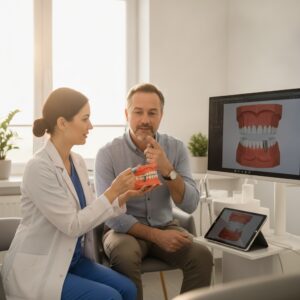
Choosing between prosthetic teeth in Panhandle, TX and dental implants can feel overwhelming. The goal is the same: restore chewing, appearance, and confidence. This guide compares common prosthetic options, explains how implants fit in, and gives practical steps so you can choose the best path for your smile.
What Are Prosthetic Teeth?
Prosthetic teeth are artificial replacements for missing teeth. They come as removable options (like full or partial dentures) or fixed options (like crowns and bridges). Prosthetic teeth replace the visible part of the tooth and restore function, but they can differ from natural teeth in fit and feel. Some prosthetic teeth are supported by dental implants, which anchor restorations to the jawbone for added stability and function.
Prosthetic Teeth In Panhandle, TX: Common Treatment Options
Removable Dentures
Full and partial dentures sit on the gums and can be taken out for cleaning. Pros: lower upfront cost, noninvasive, and quick to get. Cons: can shift while eating or speaking, need periodic relines, and may reduce chewing power compared with fixed options. They are easy to care for but require daily cleaning and soaking.
Fixed Bridges And Crowns
Fixed bridges replace one or more missing teeth by attaching to neighboring teeth. Crowns restore individual damaged teeth. Pros: feel more like natural teeth, no removal for cleaning, and good appearance. Cons: may require alteration of adjacent healthy teeth and usually have a shorter lifespan than implant-supported options.
Implant-Supported Prosthetic Teeth (Dental Implants)
Implant-supported prostheses use dental implants as anchors. Options include implant crowns, implant bridges, and full-arch solutions like All-on-4 or All-on-X. Pros: superior stability, better chewing force, and bone preservation. Cons: higher upfront cost and longer treatment time if bone grafts are needed. For many patients, implant-supported prosthetic teeth in Panhandle, TX offer the best long-term function and comfort.
Prosthetic Teeth Vs Dental Implants: Key Differences
Durability & Lifespan
Removable dentures often last 5–10 years before needing replacement or relining. Traditional bridges last about 10–15 years. Dental implants can last decades with good care; implant crowns or prostheses may need occasional maintenance but the implants themselves often remain stable long-term.
Function, Comfort, And Chewing Ability
Removable dentures typically provide less chewing power and can move during eating. Bridges improve function but rely on neighboring teeth. Dental implants restore near-natural chewing strength and feel more secure, reducing slipping and improving comfort.
Maintenance And Hygiene
Dentures require daily cleaning and overnight soaking. Bridges and crowns need meticulous brushing and flossing, including cleaning under the bridge. Implant-supported prostheses need the same daily care plus regular professional checkups to monitor bone and soft tissue health.
Costs And Long-Term Value
Dentures are usually the least expensive up front but may cost more over time due to replacements and relines. Bridges sit in the middle. Dental implants cost more initially but often provide the best long-term value because of their durability and reduced need for replacement.
How To Decide: Patient Factors That Matter
Oral Health And Bone Availability
Candidacy for dental implants depends on bone volume and gum health. Significant bone loss may require grafting before implants. Dentures and bridges are often options when bone is limited.
Medical History, Age, And Lifestyle
Health conditions like uncontrolled diabetes, smoking, or medications that affect bone healing can influence implant success. Age alone is not a contraindication, but lifestyle and overall health matter.
Goals, Budget, And Timeline
Consider whether your priority is the lowest initial cost, the fastest result, or the most durable, natural-feeling outcome. Implants take longer and cost more but often match long-term goals for function and confidence.
What To Expect: Evaluation And Treatment Process
Expect a thorough exam and imaging, often including CBCT scans, to evaluate bone and plan treatment. For dentures, timelines are shorter and recovery is minimal. Implant treatments include surgical placement, a healing period for osseointegration, and restorative steps to attach crowns or prostheses. Digital tools like intraoral scanning and guided surgery improve accuracy and predictability, reducing surprises and speeding recovery when appropriate.
Why Choose HAR Dental Group And Dr. Omar Harmouche For Prosthetic Teeth In Panhandle, TX
Dr. Omar Harmouche, DMD, is a Tufts-trained, nationally recognized implant dentist with advanced training and a public health background. HAR Dental Group serves Tulia, Plainview, and Slaton and focuses on full-mouth restorations, dental implants, and patient comfort. The practice uses CBCT, X-Nav guided surgery, Primescan digital scans, and in-house 3D printing to plan and deliver precise prosthetic teeth in Panhandle, TX. IV sedation is available for patient comfort during longer procedures.
Next Steps: Consultation, Financing, And Questions To Ask
Bring any existing X-rays, a list of medications, and notes about your goals to the consultation. Ask:
- Am I a candidate for dental implants?
- What are my treatment timeline and alternatives?
- What warranties or maintenance plans are offered?
- What financing options are available?
Financing and phased treatment plans can make implant-supported prosthetic teeth in Panhandle, TX more affordable. When you’re ready, schedule a consultation to review options and get a personalized plan for restoring your smile and function.